01Business process
Understand the work before changing it.
Find where work waits, repeats, or depends on someone remembering.
The approach
I start by understanding how the work moves through the business — where it slows down, gets repeated or gets lost. Then I decide whether technology can actually improve it.
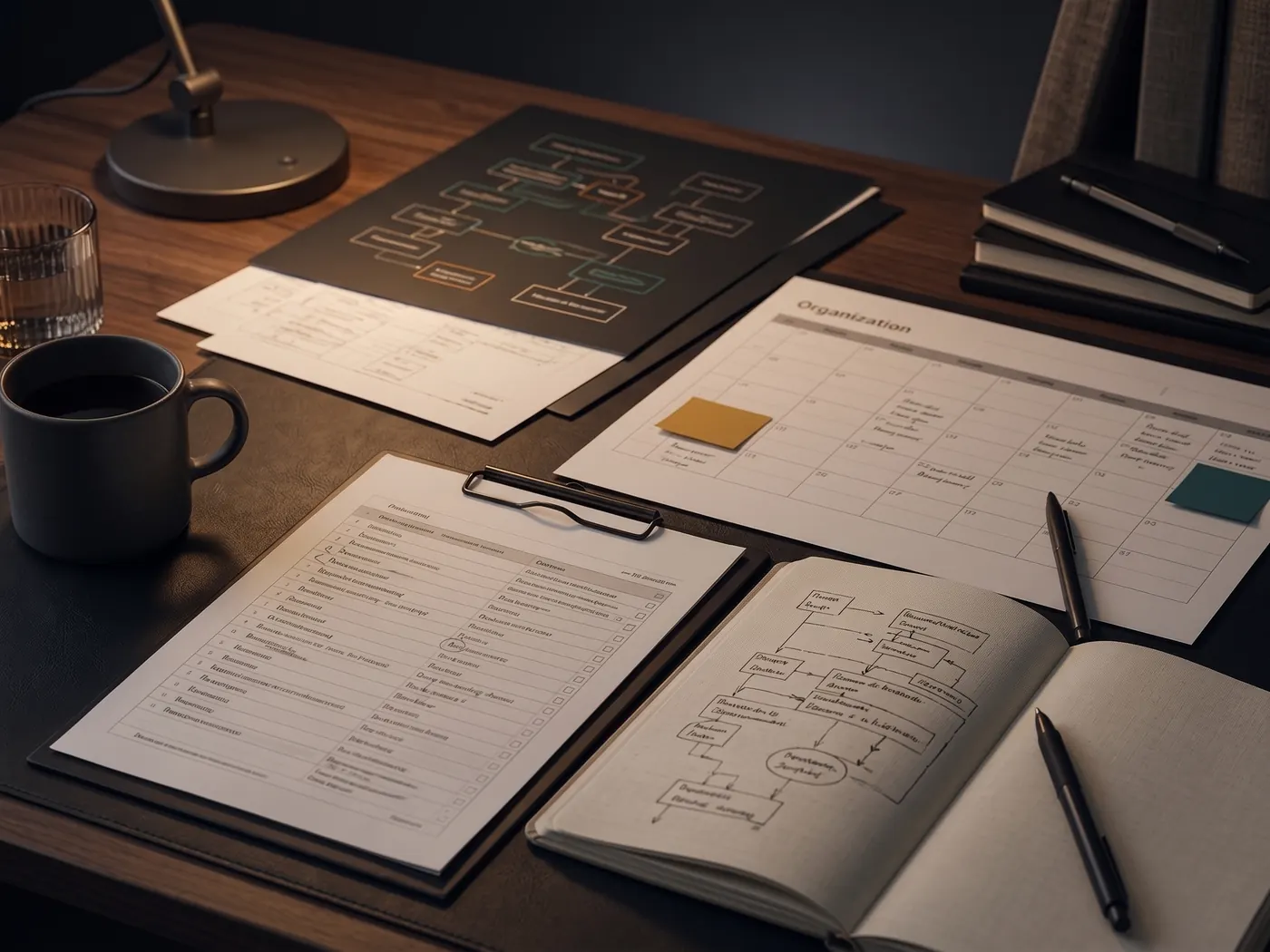
How I think about the work
An enquiry waits in an inbox. A quote is never followed up. The same information gets copied between three systems. Those are the problems worth finding before deciding what to build.
Understand
Find the friction
Build the smallest useful system
Test it in real work
What I bring to the work
Find where work waits, repeats, or depends on someone remembering.
Real data, errors, integrations and edge cases are the whole job.
Understanding, classifying and responding — not AI inserted into every step.
The system has to fit the people, tools and process around it.
Describe what keeps slowing the work down. I'll help work out whether there is a sensible system worth building.